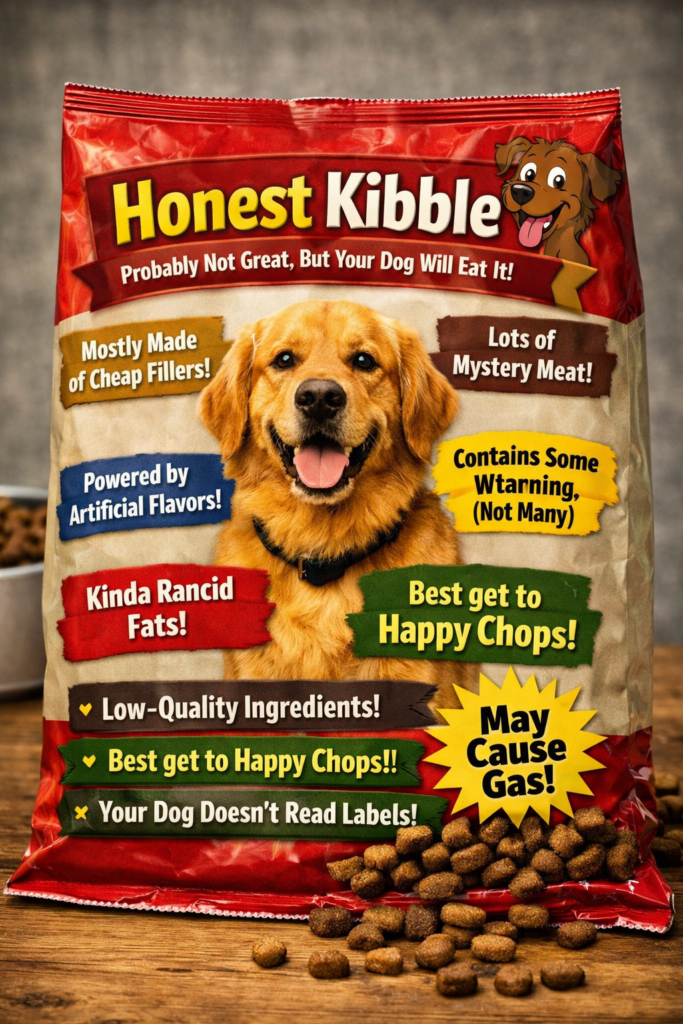
When it comes to our pets, we all want to do right by them. They’re family when all said and done. So naturally, choosing what to feed them feels like a big deal. But the pet food world can be a marketing maze designed to make you feel confident; whilst quietly pulling the wool over your eyes.
Let’s peel back the curtain and talk about the tricks, traps, and tasty-sounding nonsense that make up modern pet food marketing — and why a bit of savvy goes a long way.
1. The “Natural”, “Holistic”, and Other generic terms
Pet food companies love a good buzzword. “Natural.” “Holistic.” “Organic.” They sound wholesome enough to make you imagine your dog’s dinner was hand-picked by Mother Nature herself.
A lot of the time however, in the pet food industry, these words don’t actually mean much. There’s no strict definition, no real standard, and plenty of wiggle room for brands to slap them on a bag of highly processed kibble that’s been heated, extruded, and blasted into something that barely resembles food.
“Natural” can legally include synthetic vitamins, processed ingredients, and fillers. So while the packaging suggests “farm-fresh goodness,” the reality is often closer to “factory-made crunch nuggets.”
2. The Premium Ingredient Illusion
“Wild-caught salmon.” “Free-range chicken.” “Grain-free superfood blend.”
Sounds fancy, like your dog is about to dine at a Michelin-starred restaurant.
But look closely and you’ll often find that these premium ingredients make up a tiny fraction of the recipe. The bulk? Cheap fillers and carb-heavy binders. You’re paying premium prices for premium marketing, not necessarily premium nutrition.
And grain-free? We’ll get to that in a moment.
3. Packaging That Belongs in a Farmers’ Market
Pet food bags are works of art these days. Juicy steaks, vibrant veg, glistening berries — it’s practically a cookbook cover.
But the final product? A brown biscuit that looks nothing like the photos and often contains very little of what’s pictured.
It’s not illegal. It’s just… creative. And it works. Those images are designed to make you feel good about what you’re buying, even if the contents tell a different story.
4. The “Scientifically Formulated” Sales Pitch
Some brands lean in heavily on the lab coat aesthetic. “Veterinary approved.” “Scientifically developed.” “Clinically tested.”
Now, proper nutritional science is incredibly important — but not all “science” claims are created equal. Sometimes it’s genuine research. Other times it’s a marketing slogan wearing glasses.
A formula “designed for senior Labradors with sensitive tummies who enjoy long walks on the beach”? Sounds impressive. Often it’s just a standard recipe with a niche label slapped on.
5. The Grain-Free Gimmick
The grain-free craze — the trend that swept the pet world faster than a spaniel chasing a squirrel.
It started with concerns about allergies, but quickly turned into a marketing goldmine. Unfortunately, many grain-free foods simply swapped grains for other starchy fillers like peas, lentils, and potatoes. High carb, low benefit.
Worse still, some grain-free diets were later linked to heart issues in dogs. A perfect example of how a trend can take off before the science catches up — and how marketing can drown out common sense.
Conclusion: Cutting Through the Kibble Chaos
Pet food marketing is a masterclass in smoke and mirrors. But once you know the tricks then it makes you harder to fool.
Read the ingredients. Question the claims. Look past the package presentation. Remember that your pet’s diet should be based on real nutrition and not clever packaging.
At Happy Chops, we believe in feeding cats and dogs a biologically appropriate diet — with honesty, transparency, and actual food. No gimmicks. No fairy dust. Just proper nutrition for pets. We’ve always been here to help inform and support our customers.
If you ever want help decoding a label or choosing the right diet for your furry friend, you know where to find us.