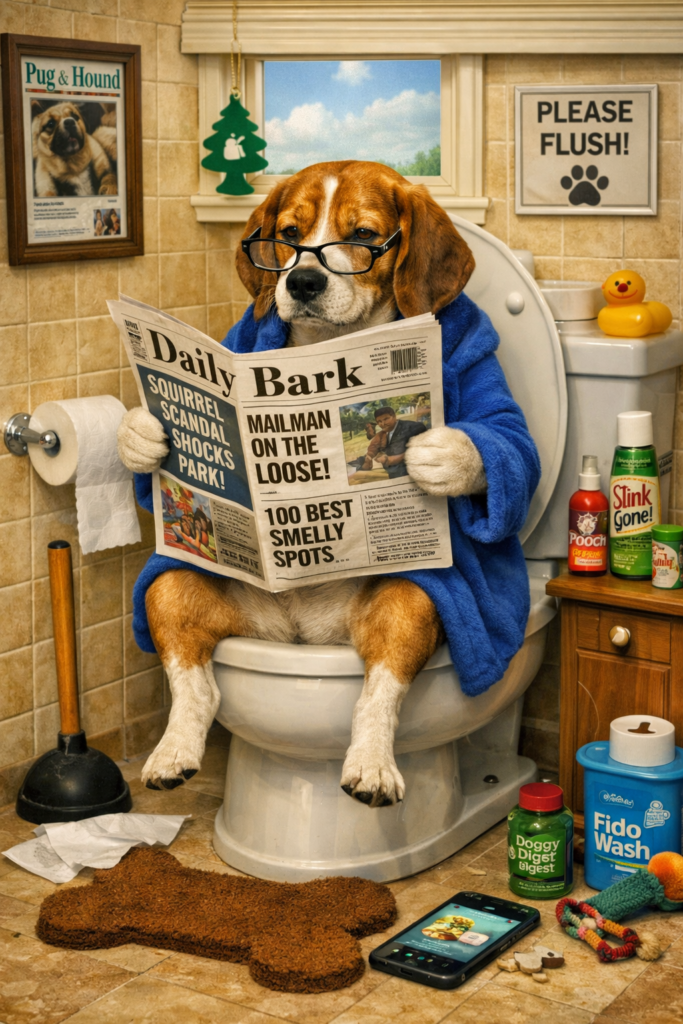
Dog poo is not the most glamorous part of pet ownership, but it’s one of the most informative. At Happy Chops, we like to think of it as your dog’s daily nutritional report card — delivered promptly, colour‑coded, and with absolutely no regard for where you happen to be standing!
When you know what you’re looking for, that little pile on the pavement, grass, or (inevitably) the one patch of gravel you didn’t check, can tell you a huge amount about how well your dog’s diet is working for them. Let’s dive into the surprisingly helpful world of canine output.
1. Consistency: The Gold Standard of Good Digestion
A well‑formed, easy‑to‑pick‑up poo is the digestive equivalent of a round of applause. It usually means:
- The diet is balanced
- The ingredients are being digested efficiently
- The gut is happy
- The dog is thriving on what they’re eating
On a fresh, biologically appropriate raw diet, you’ll often see smaller, firmer poos because the body is actually using the nutrients rather than sending them straight through. If things suddenly turn soft, sloppy, or suspiciously pudding‑like, it’s often your dog’s way of saying, “Something in my bowl isn’t agreeing with me.”
2. What Goes in… Really Does Come Out
Your dog’s poo is a direct reflection of their diet — no mystery, no drama, no pretending they “haven’t eaten anything weird today.”
A few examples:
- Too much fat? You may see pale, greasy stools.
- A new protein? Expect a temporary wobble while the gut adjusts.
- Low‑quality food? Often results in large, smelly, frequent poos because the body can’t use much of it.
- A well‑balanced raw diet? Small, firm, low‑odour poos that crumble when dry. Nature’s confetti.
Dogs don’t lie. Their digestive system is brutally honest.
3. Warning Signs: The Poo Patrol Never Sleeps
Changes in poo can be the first sign that something isn’t quite right nutritionally.
Things worth paying attention to:
- Sudden diarrhoea — could be dietary intolerance, stress, or something they’ve sneakily hoovered up.
- Very dark stools — may indicate blood higher up in the digestive tract.
- Mucus — often a sign of gut irritation.
- Frequent soft stools — may mean the diet needs adjusting (too rich, too fatty, or not balanced).
4. Regular Maintenance: Not Just Picking It Up
Yes, picking up poo is part of the job description, but it’s also your daily opportunity to monitor your dog’s nutritional health.
A quick glance can tell you:
- Whether the current diet is working
- Whether a new food is being tolerated
- Whether bone content is right
- Whether hydration is adequate
- Whether supplements are helping
Think of it as your dog’s nutritional diary — you’re just the one doing the reading.
5. Adaptability: Dogs Are Flexible, But Their Guts Appreciate Support
Changes in diet, routine, or environment can affect poo. Even the most robust raw‑fed dog may have an off day after:
- A sudden protein switch
- A new treat
- A stressful event
- A cheeky bin‑raid (classic)
Dogs adapt quickly, but supporting transitions — especially dietary ones — helps keep their digestion steady. Slow introductions, probiotic support, and sticking to high‑quality ingredients make all the difference.
6. The Unpredictable: Because Dogs Are Dogs
Even with the best diet in the world, dogs occasionally produce something that makes you say, “What on earth is THAT?”
A one‑off odd poo is usually nothing to worry about. Dogs are adventurous creatures with questionable judgement. But if unpredictability becomes the norm, it’s time to revisit the diet and check for intolerances, imbalances, or sneaky snack‑thievery.
7. Letting Go: Dogs Do It Well
Dogs are brilliant at letting go — literally and figuratively. When their digestive system is working beautifully, they eliminate waste efficiently and comfortably. No straining, no urgency, no drama.
A dog who poos easily and regularly is usually:
- Digesting well
- Absorbing nutrients
- Comfortable in their gut
- Thriving on their diet
It’s one of the simplest, clearest signs of good nutritional health.
Conclusion
Dog poo may not be glamorous, but it’s one of the most reliable indicators of how well your dog’s diet is serving them. From firmness and frequency to colour and content, every little detail tells a story about their digestive health and nutritional needs.
At Happy Chops, we believe in feeding dogs the way nature intended — and when you do, their poo will tell you loud and clear that you’re on the right track.
So next time you’re out on a walk, biodegradable bag in hand, take a moment to appreciate the humble poo. It’s not just a chore — it’s a daily check‑in from your dog’s digestive system, delivered with love, honesty, and occasionally a bit too much enthusiasm!